



AccuWeather meteorologists are available 24/7 to provide further insights and updates on evolving weather conditions. Please contact pr@accuweather.com during regular business hours, or support@accuweather.com or call AccuWeather’s Media Hotline at (814)-235-8710 at any time to arrange interviews with AccuWeather experts or to request the most updated graphics for print or broadcast.
Hurricane Beryl approaching Mexico, flooding threat increasing in south Texas
July 4, 2024

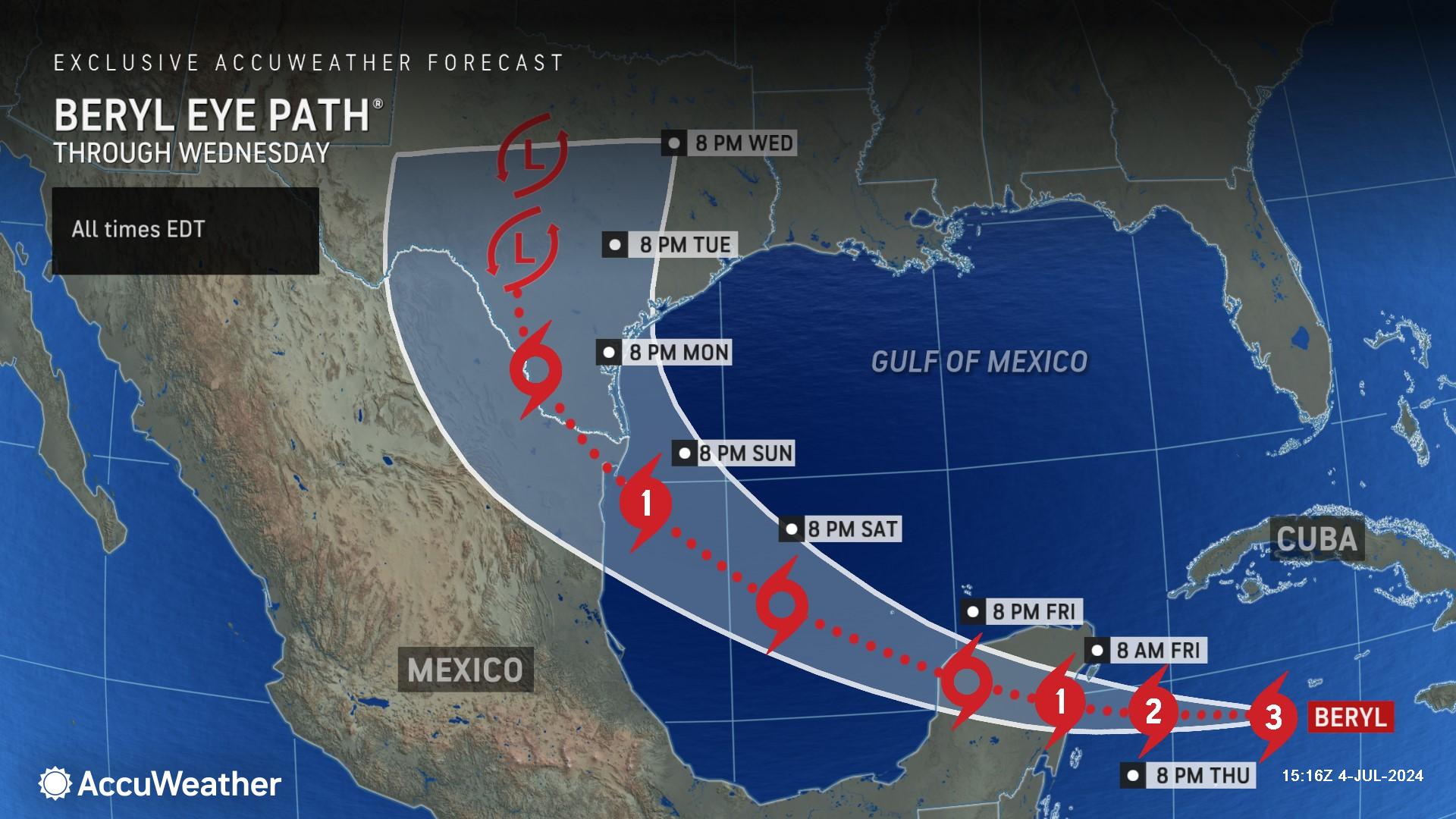
> Beryl expected to make landfall in Yucatan Peninsula early Friday morning as
a Category 1 hurricane

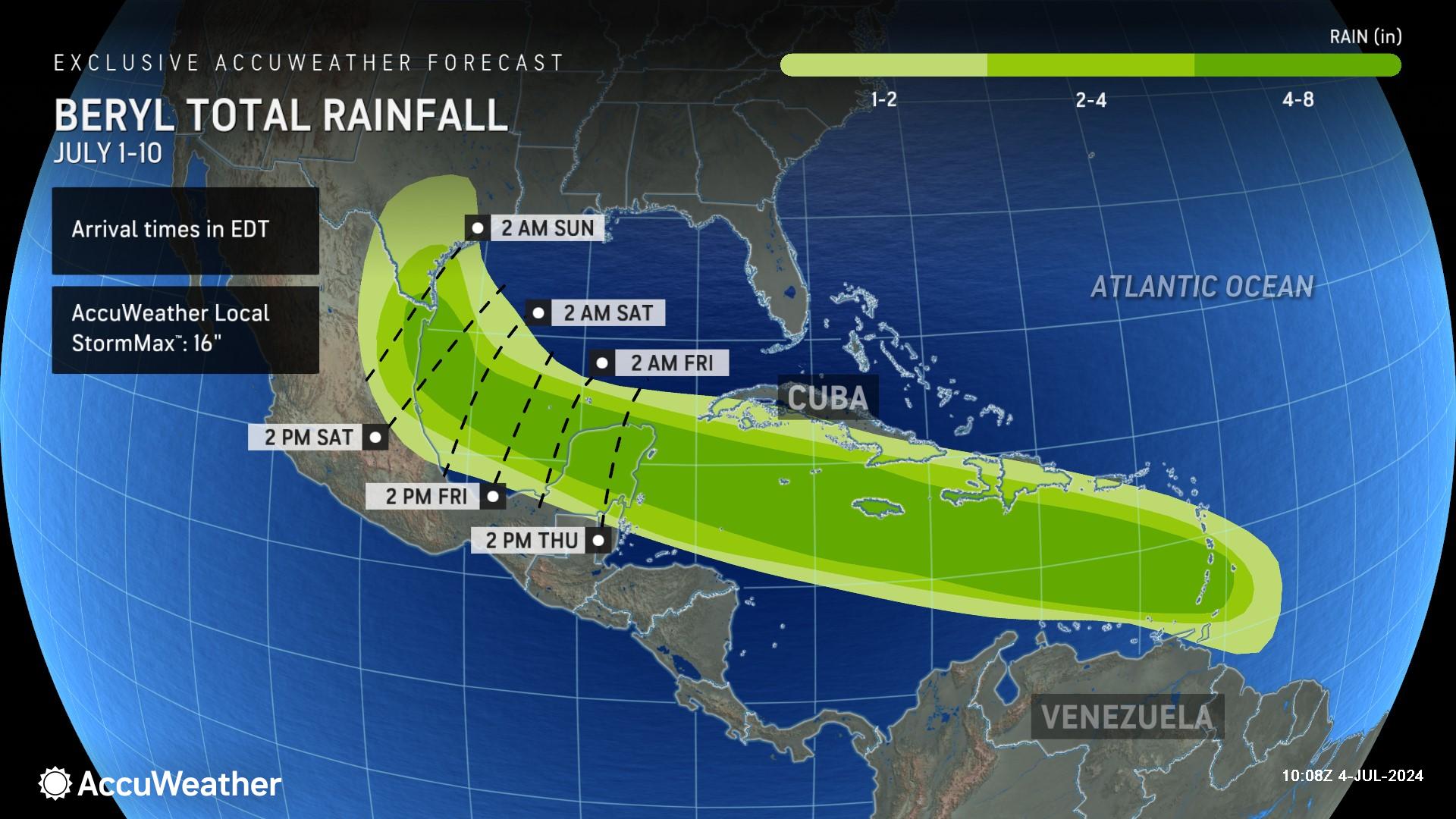
> Rainfall totals topping 4-8 inches could cause flash flooding in southern Texas

> Swells from Beryl increasing the risk of rip currents across U.S. Gulf Coast
beaches from Texas to Florida
AccuWeather Global Weather Center – July 4, 2024
Families, businesses, and tourists in the Yucatan Peninsula are being urged to prepare for impacts from a Category 1 hurricane with maximum sustained winds of 74-95 mph on the Saffir-Simpson Hurricane Wind Scale.
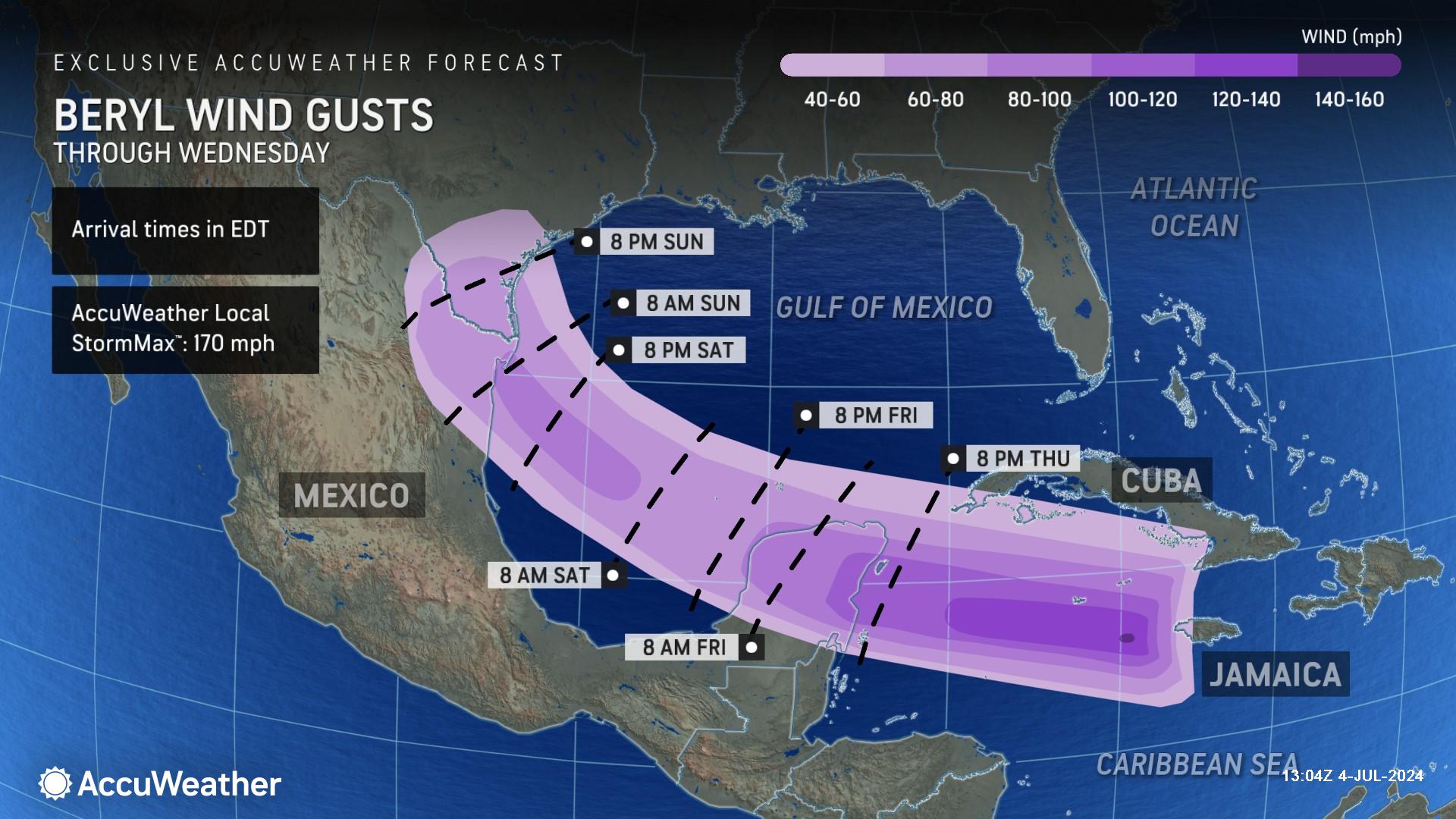
“Beryl is still a fierce storm,” said AccuWeather Meteorologist Geoff Cornish. “Wind gusts could top 100 mph when Beryl makes landfall in the Yucatan Peninsula early Friday morning.”
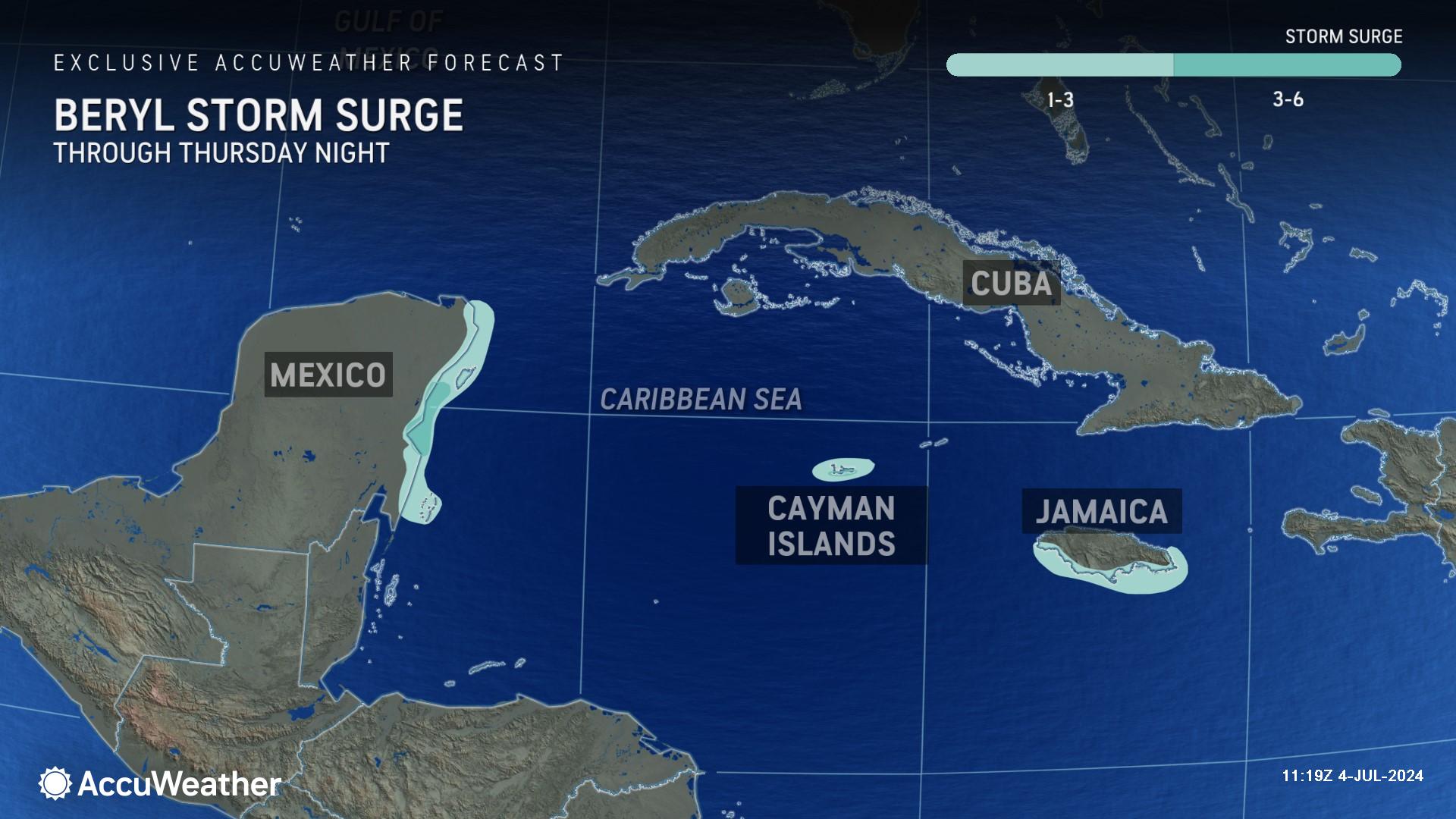
AccuWeather expert meteorologists say Hurricane Beryl could bring 3-6 feet of storm surge and 4-8 inches of rain to the Yucatan Peninsula.
“As Beryl approaches the Yucatan Peninsula, it will encounter more disruptive wind shear. We expect Beryl to lose some wind intensity, becoming a Category 1 hurricane at landfall,” said Cornish.
Beryl's encounter with the frictional forces of the large landmass of the Yucatan Peninsula and wind shear will further degrade the hurricane's wind intensity Friday.
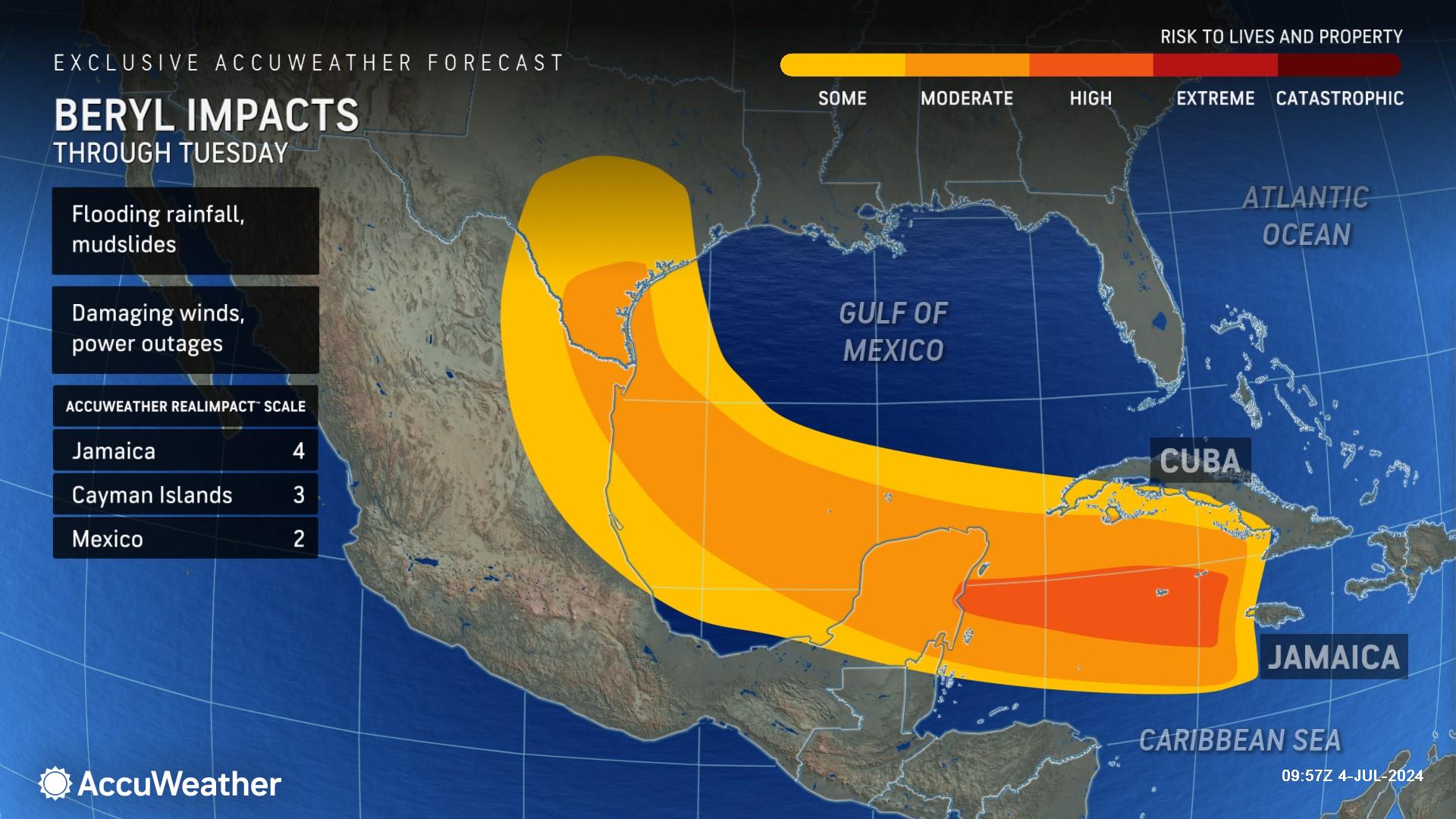
The AccuWeather RealImpact™ Scale for Hurricanes in Mexico is a 2, which warns of moderate flooding, significant wind damage to small buildings, mobile homes, and trees, as well as power outages and significant property damage from coastal inundation.
Cornish says Beryl scraped the southern coasts of Jamaica and the Cayman Islands, but the destructive winds in the eyewall of the hurricane stayed offshore.
“The strongest winds from Hurricane Beryl passed by southern Jamaica within just a matter of miles, sparing the island from suffering even more damage.”
Increasing risk of impacts in Texas
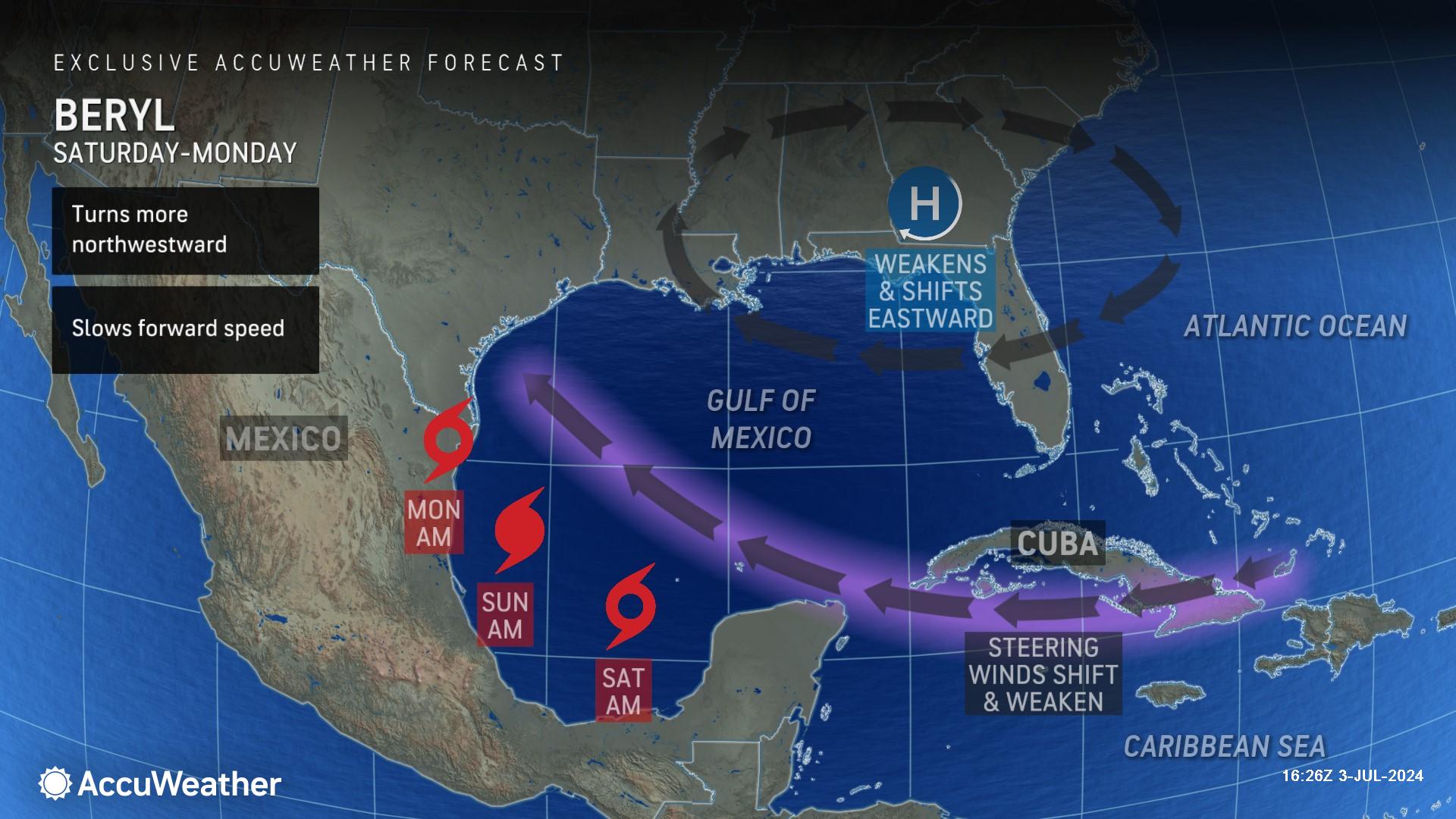
Beyond the Yucatan Peninsula, Beryl will emerge over the warm waters of the southwestern Gulf of Mexico Friday night.
AccuWeather expert meteorologists say there is some indication that wind shear may ease a bit while Beryl is over the southwestern Gulf of Mexico. Factoring in lessening wind shear, warm water and access to tropical moisture, Beryl may regain hurricane intensity after spending some time as a tropical storm from Friday to Saturday.
How much strength Beryl regains over the southwestern Gulf this weekend before landfall, as well as a reduction in forward speed, will affect the magnitude of impacts in northeastern Mexico and southern Texas.
“We expect 4-8 inches of rain in Brownsville, Texas. San Antonio and Austin will likely see several inches of rain from Beryl as well,” said Cornish.
Rain from Beryl will arrive in southern Texas late Saturday night into early Sunday morning.
AccuWeather Lead Long-Range Expert Paul Pastelok warned that families and businesses need to be prepared for the possibility of flooding and should closely monitor forecast updates.
“There is a chance that this storm may stall once it gets onshore in northern Mexico and southern Texas, which could lead to more rainfall and flooding concerns,” said Pastelok.
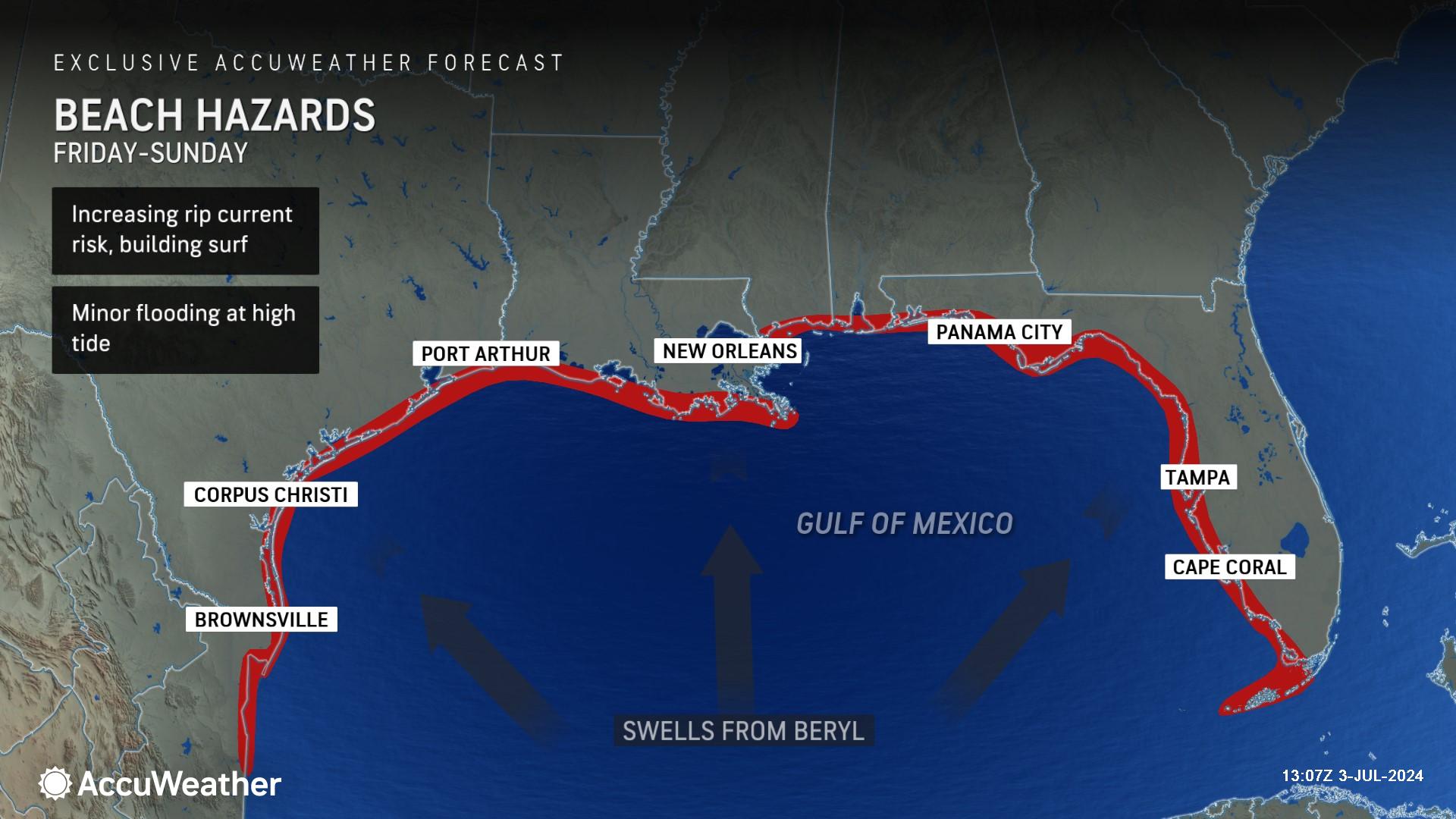
AccuWeather expert meteorologists say people visiting beaches along northern Mexico and southern Texas need to be aware of the threat of rough surf and rip currents starting Friday and lasting throughout the weekend.
Swells from Beryl could cause rip currents across much of the U.S. Gulf Coast, including beaches as far away as Florida.
AccuWeather Forecast Graphics
Additional AccuWeather Resources:
Dangerous Hurricane Beryl to make landfall in Mexico before eyeing southern Texas
Category 5 Hurricane Beryl rewrites the record books
What is wind shear and how does it impact hurricanes, other tropical cyclones?
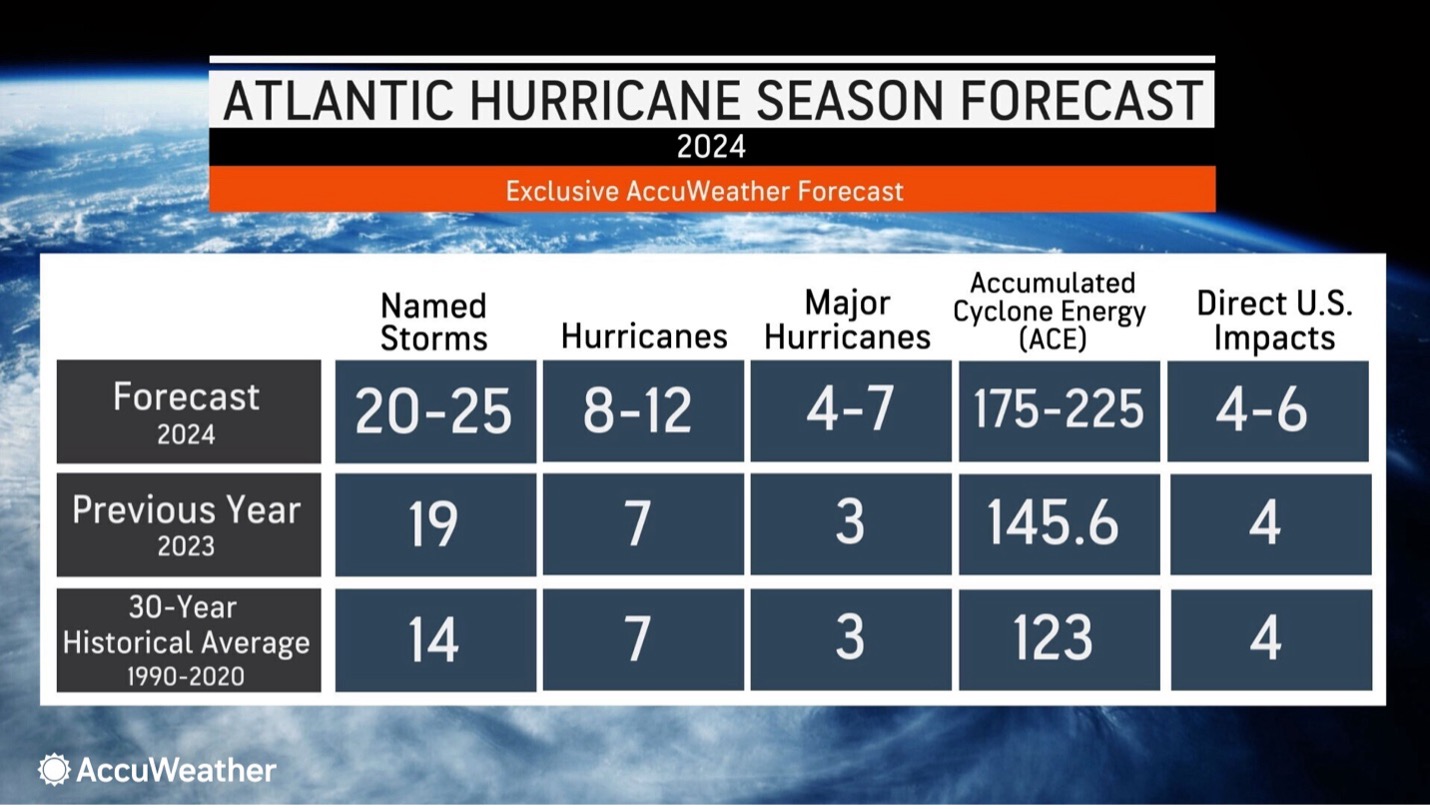
AccuWeather Forecasts Explosive 2024 Hurricane Season
Rapidly Intensifying Hurricanes Near Coastline Pose Major Threat To U.S. This Season
Hurricane season: AccuWeather's guide for first-timers
The warning signs of rip currents
How to avoid the potentially deadly grip of a rip current


