

AccuWeather meteorologists are available 24/7 to provide further insights and updates on evolving weather conditions. Please contact pr@accuweather.com during regular business hours, or support@accuweather.com or call AccuWeather’s Media Hotline at (814)-235-8710 at any time to arrange interviews with AccuWeather experts or to request the most updated graphics for print or broadcast.
California Expected To Be Drought-Free Through 2025 Following Epic Winter Storms
|
|||||||||||
March 4, 2024

AccuWeather Global Weather Center – March 4, 2024
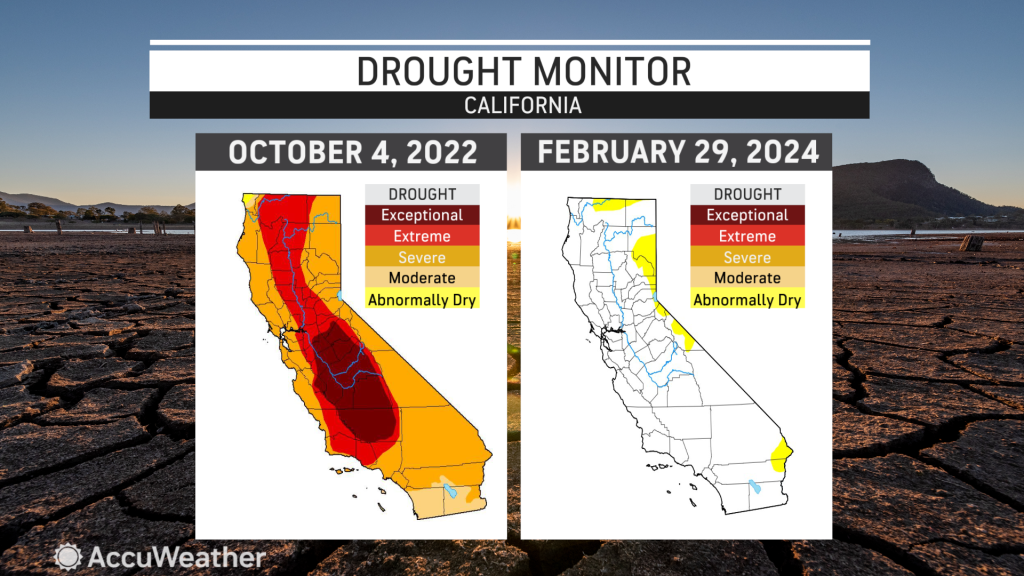
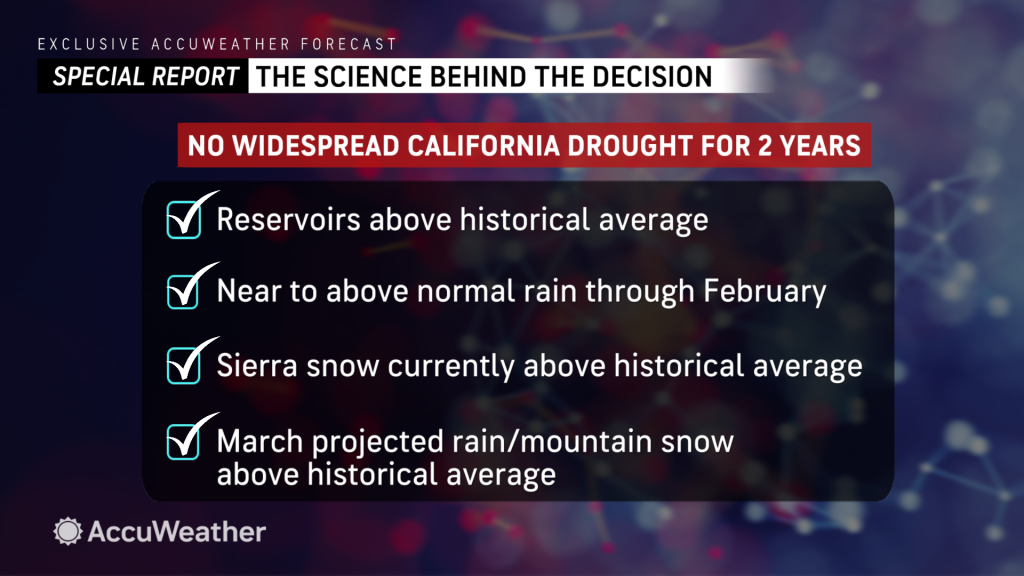
AccuWeather meteorologists say the state of California will be free of widespread drought through the end of 2025.
The major announcement comes on the heels of a blockbuster blizzard that dumped more than 80 inches of snow on the mountains of northern and central California.
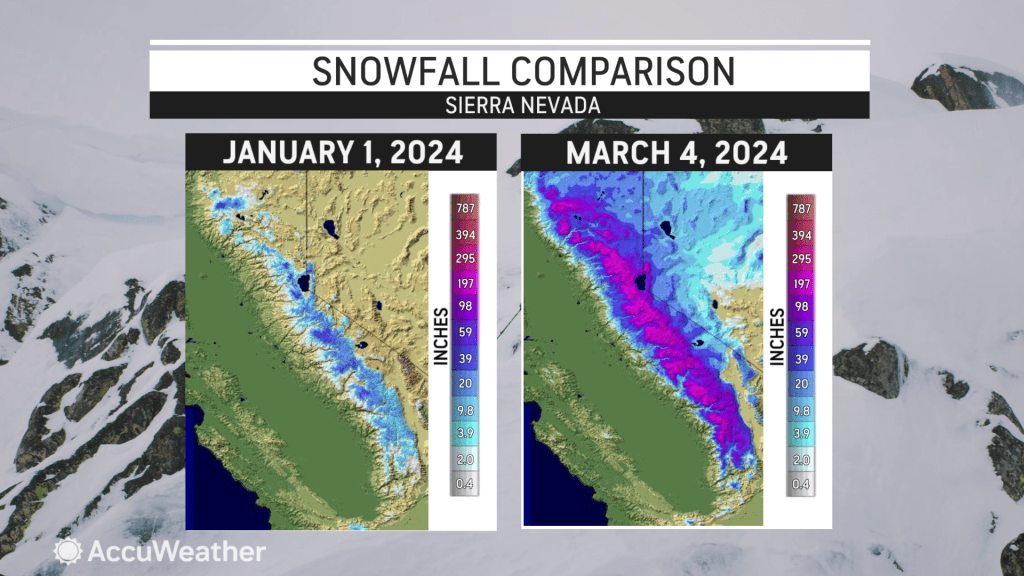
AccuWeather California Expert Ken Clark says the back-to-back wet and snowy winters are welcome news in the long-term battle against drought, following years of heat waves and lackluster wet seasons that took a toll on reservoirs and underground aquifers.
“The combination of the abundance of rain and snow from the winter of 2022-2023, the state of reservoirs currently, and what has happened this winter, gives a high confidence that drought conditions will remain absent in California well into 2025,” said Clark.
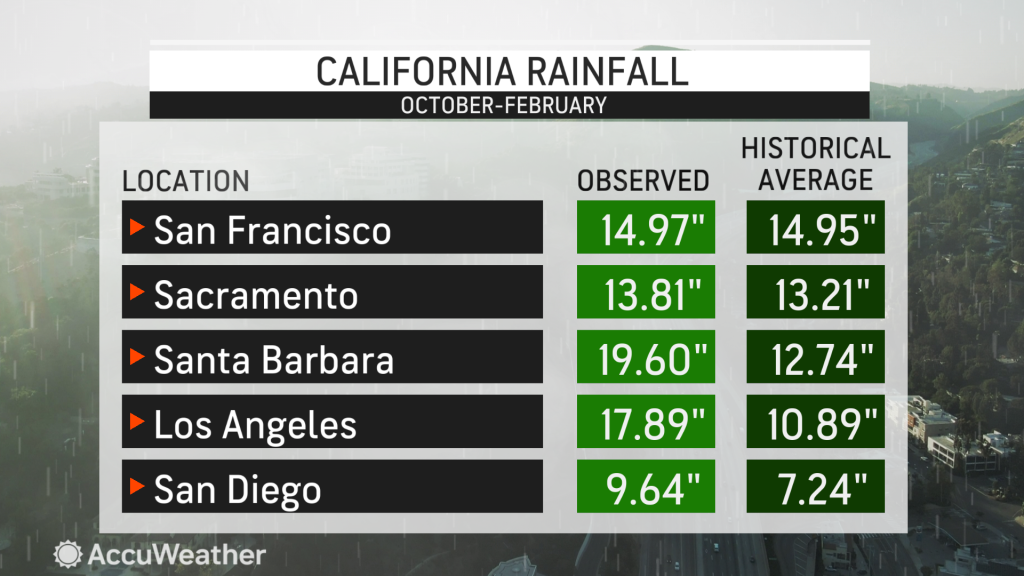
Two wild winters in a row
Atmospheric rivers and massive snowstorms headlined the 2022-2023 winter season, which wiped away short-term drought concerns in California.
The current wet season started off slow and dry, until the start of 2024. Rounds of mountain snow helped boost the snowpack, followed by a blizzard that dumped more than 80 inches of snow in the Sierra Nevada during the first weekend of March.
Six key reservoirs across California have water levels at or well above the historical average.
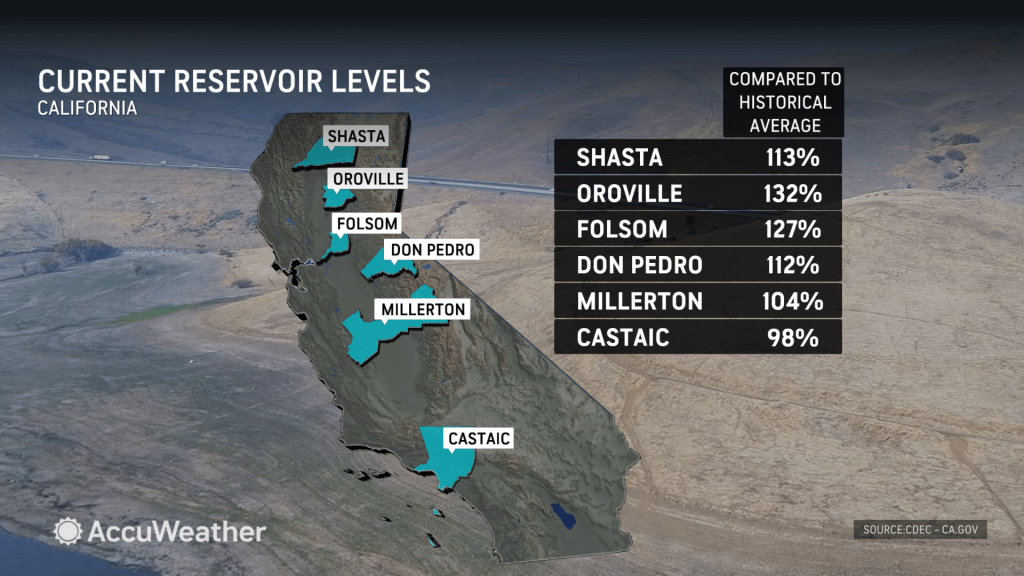
Reservoir levels will continue to climb in the coming weeks, with the potential for more snowfall before the end of the wet season. Snow will melt as temperatures rise in the spring and summer months, resulting in increased flows in creeks and streams, into rivers and reservoirs. Additional water releases may be needed at some reservoirs to make room for the spring snowmelt.
In the coming months, should warmth arrive with more intensity than the historic average, there could be localized flooding concerns, especially along creeks and streams, as melting of the massive snowpack accelerates.
When will drought conditions return?
The return of widespread drought to California is not a question of if it will happen, but when.
It can take just one "dry" wet season to start ringing alarm bells for a new, emerging drought.
AccuWeather experts predict the current El Niño will be swiftly replaced by La Niña before next winter, which increases the likelihood of dry weather on the horizon.
The shift does not guarantee that a new drought is imminent.
“Even if it were a drier than historical average year, the last two winters should prevent any long-term drought problems,” said Clark.
Water management and storage is critical for families and businesses across California, and can have nationwide impacts.
“In California, water is as precious of a commodity as gold. Every drop of rain and flake of snow needs to be captured. Conservation must never stop,” explained AccuWeather Chief Broadcast Meteorologist Bernie Rayno. “We expect that widespread drought will return to California in the coming years. Drought is a way of life and part of the DNA of California.”
The California Department of Water Resources manages 17 reservoirs. The State Water Project supplies water to nearly 27 million Californians using a network of dams, canals, and pumping plants.
“Water conservation is still very critical. We expect these cycles of plentiful precipitation to drought to be amplified in our changing climate,” said AccuWeather Chief Meteorologist Jon Porter. “Drought conditions will come back to California. It’s just a matter of when.”
The recent trend of ample moisture and rising reservoir levels is a relief for many farmers and ranchers across the Golden State.
“Water is a big economic driver in California. Almost half of the vegetables and fruits produced in the United States come from California. That’s a lot of produce,” said Clark. “About 40 percent of the water used in California goes to some form of farming."
What does this mean for wildfire season?
The surplus of rain and snow will help lower the overall wildfire risk across much of California this summer and fall, but AccuWeather experts say there will also be an abundance of vegetation again this year, which can fuel fires, especially grass fires.
“Everything is greened up in a lot of areas in California as a result of this plentiful precipitation. Fuels like grasses can dry out quite quickly, especially during time periods where there’s a little bit of wind,” said Porter. “People need to remain vigilant at all times for the the risk of wildfires, especially grass fires, even without widespread drought.”
Additional AccuWeather Resources:


