



AccuWeather meteorologists are available 24/7 to provide further insights and updates on evolving weather conditions. Please contact pr@accuweather.com during regular business hours, or support@accuweather.com or call AccuWeather’s Media Hotline at (814)-235-8710 at any time to arrange interviews with AccuWeather experts or to request the most updated graphics for print or broadcast.
Flooding Threat Intensifies Along Gulf Coast From Texas To Florida
|
|||||||||||
May 14, 2024

AccuWeather Global Weather Center – May 14, 2024
AccuWeather expert meteorologists say more flooding is possible along creeks, rivers, and bayous from east Texas to north Florida this week, with rounds of torrential rainfall in the forecast.
There is also a high risk of urban flash flooding, which could impact travel in the region and put lives and property at risk.
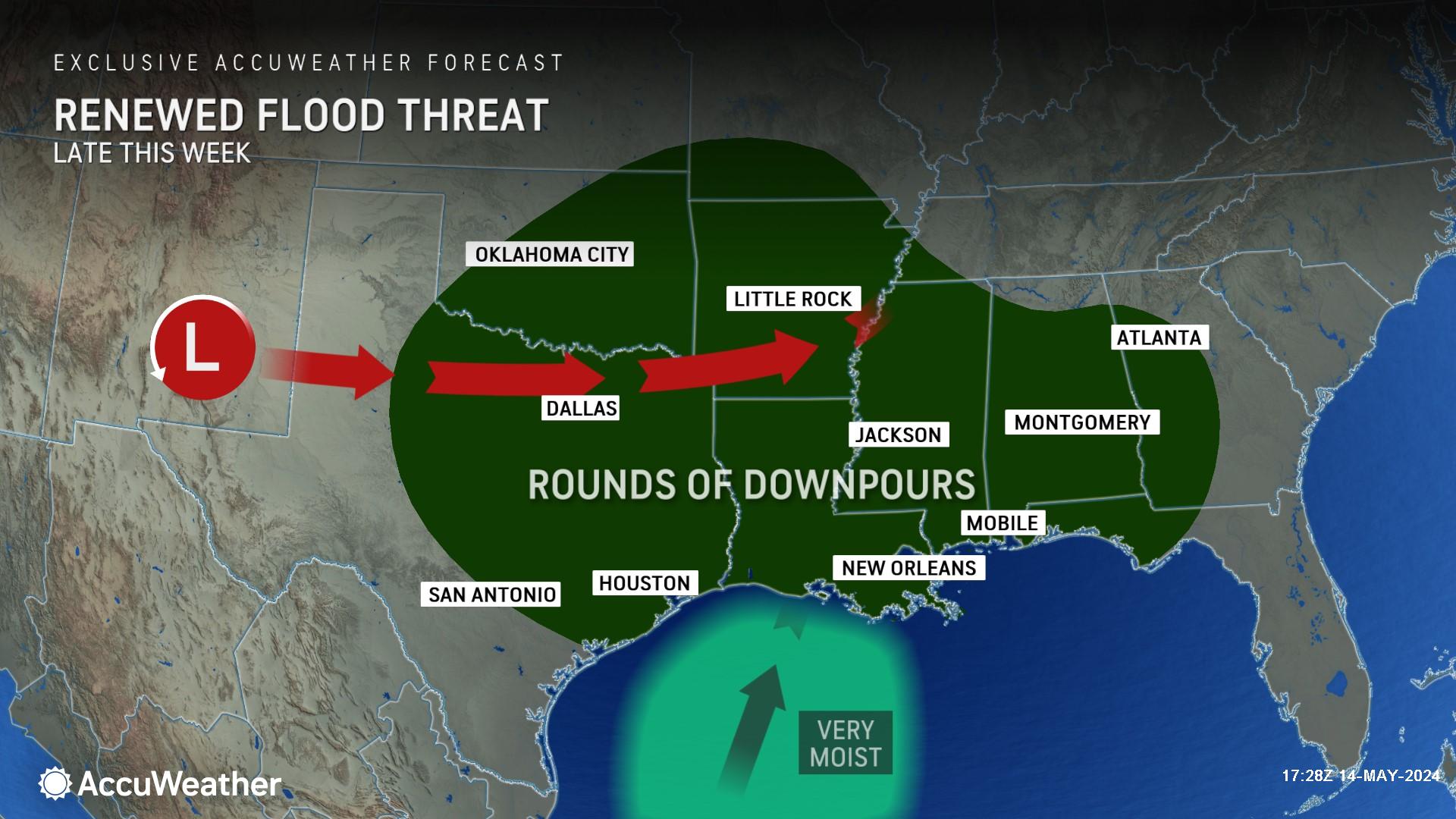
Many streams and rivers have started to recede earlier this week in eastern Texas, but other rivers and streams in parts of Texas, Louisiana, and Mississippi are still well above flood stage, following recent rounds of storms and flooding.
AccuWeather Flooding Expert Alex Sosnowski warns that there can be a delayed response in river levels rising following heavy rainfall, since it takes time for runoff to reach progressively larger streams, bayous, and rivers.
“If you live along rivers or streams anywhere from eastern Texas all the way over to Mississippi, Alabama, and even Georgia, you need to closely watch the water levels for the next 7-10 days. This rainy pattern is far from over.” said Sosnowski. “Where these rainfall events overlap is where you’re going to have the most significant risk of rising water levels and flooding.”

Expert meteorologists at AccuWeather’s Global Weather Center say a new storm will push out from the southern Rockies on Wednesday and will initiate a new surge of moisture from the Gulf of Mexico beginning Thursday. Drenching rain and thunderstorms will arrive in eastern Texas on Thursday and expand eastward on Friday and Saturday.
Heavy rainfall will impact the Interstate 10 and Interstate 20 corridors later this week as the rainfall expands eastward.
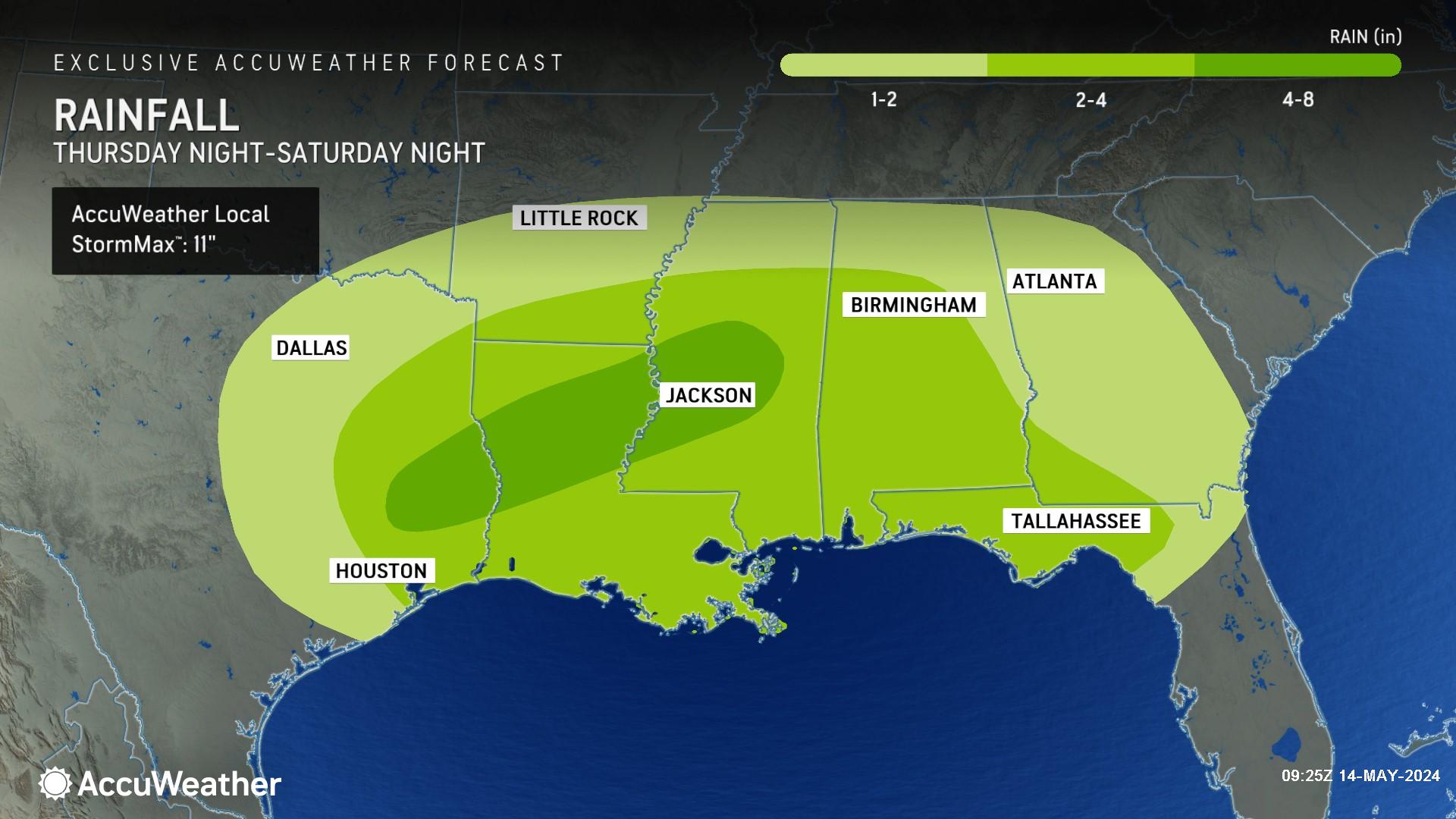
AccuWeather expert meteorologists say 2-4 inches of rain will fall across a broad area along the Gulf Coast states from Thursday evening through Saturday night. A zone from eastern Texas, through central Louisiana, and central Mississippi could see 4-8 inches of rainfall.
AccuWeather Chief Meteorologist Jon Porter says people who live and work in flood-prone locations in this region should monitor the forecast closely and prepare to take proactive action, which may include voluntary or mandatory evacuations.
“Flooding concerns are dangerous at all times of the day, but they’re especially dangerous at night when you have rapidly rising water, which can be very difficult to see exactly what’s going on around you. If there are evacuation requirements in your community, you want to take those requests from emergency officials very seriously and leave areas where officials are recommending that you do so,” said Porter. “There can be dangerous chemicals in flood waters. There are health risks, even electrocution hazards if you have power lines near water. Dangerous wildlife can also be lurking in flood waters. You do not want to touch or walk through flood waters.”
Porter also warned people to never drive on flooded roads.
“Turn around and find another route. You never know just how deep that water is or how fast that water is flowing,” said Porter. “You don’t know if the roadway under the flooding has been compromised, which could lead to an extremely dangerous situation.”
Additional AccuWeather Resources:


