



AccuWeather meteorologists are available 24/7 to provide further insights and updates on evolving weather conditions. Please contact pr@accuweather.com during regular business hours, or support@accuweather.com or call AccuWeather’s Media Hotline at (814)-235-8710 at any time to arrange interviews with AccuWeather experts or to request the most updated graphics for print or broadcast.
AccuWeather Hurricane Experts Provide Updated Assessment of Atlantic Hurricane Season Forecast Amid Unusual August Surge of Dry, Dusty Air and Persistent Wind Shear
August 28, 2024

AccuWeather Global Weather Center – August 28, 2024
Following an unusually quiet stretch in the tropics during the month of August in the wake of Hurricanes Debby and Ernesto, tropical activity is expected to intensify in the month of September.
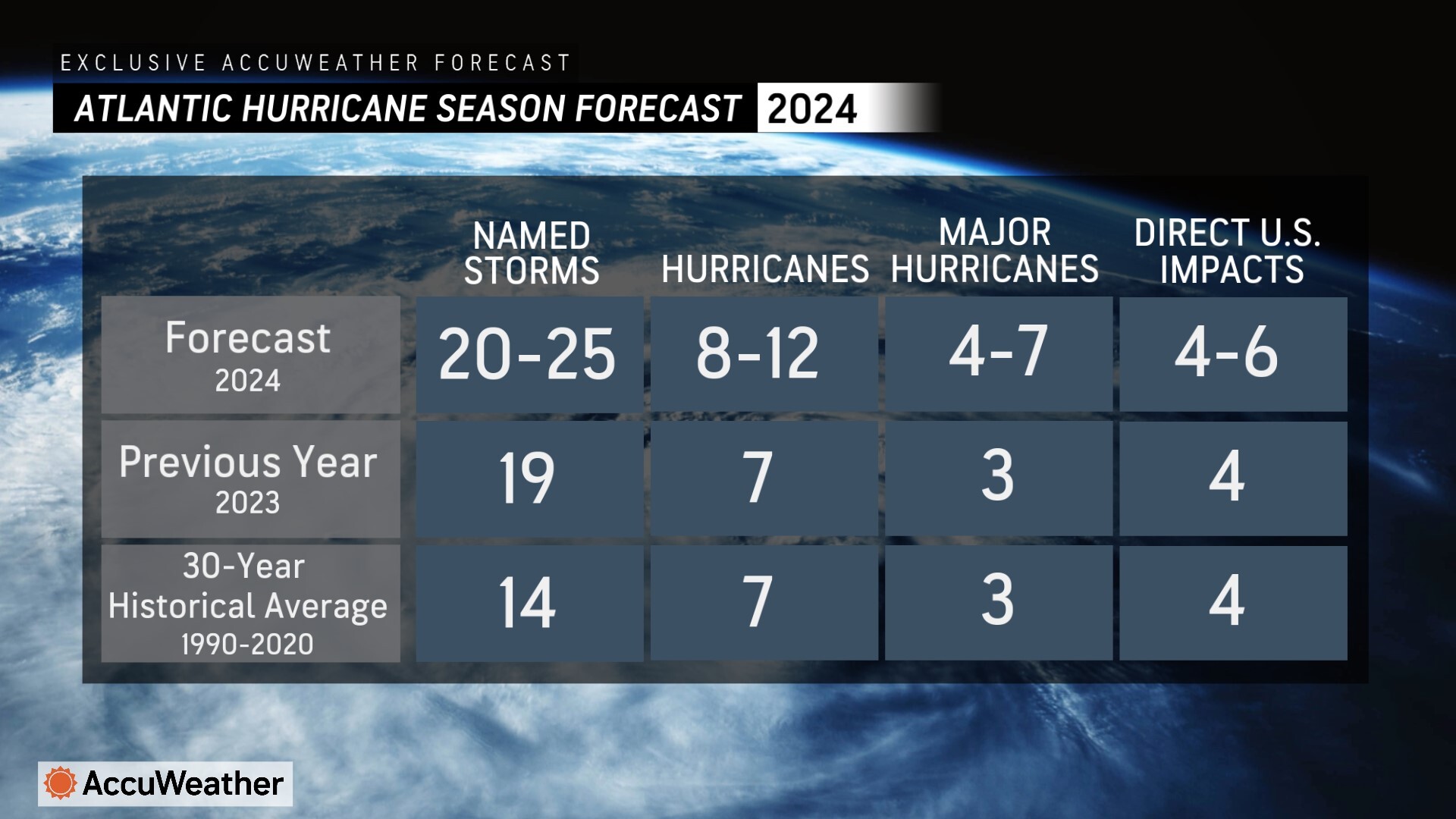
“AccuWeather expert meteorologists continue to forecast 20-25 named storms through this Atlantic hurricane season. However, in a new development, AccuWeather hurricane experts now assess that 20-23 named storms are most likely, which are fewer named storms than many other sources are predicting,” explained AccuWeather Chief Meteorologist Jon Porter. “The reason for this assessment is the long lull that has been experienced in recent weeks where there have been no named storms during what is typically a very active time of the hurricane season.”
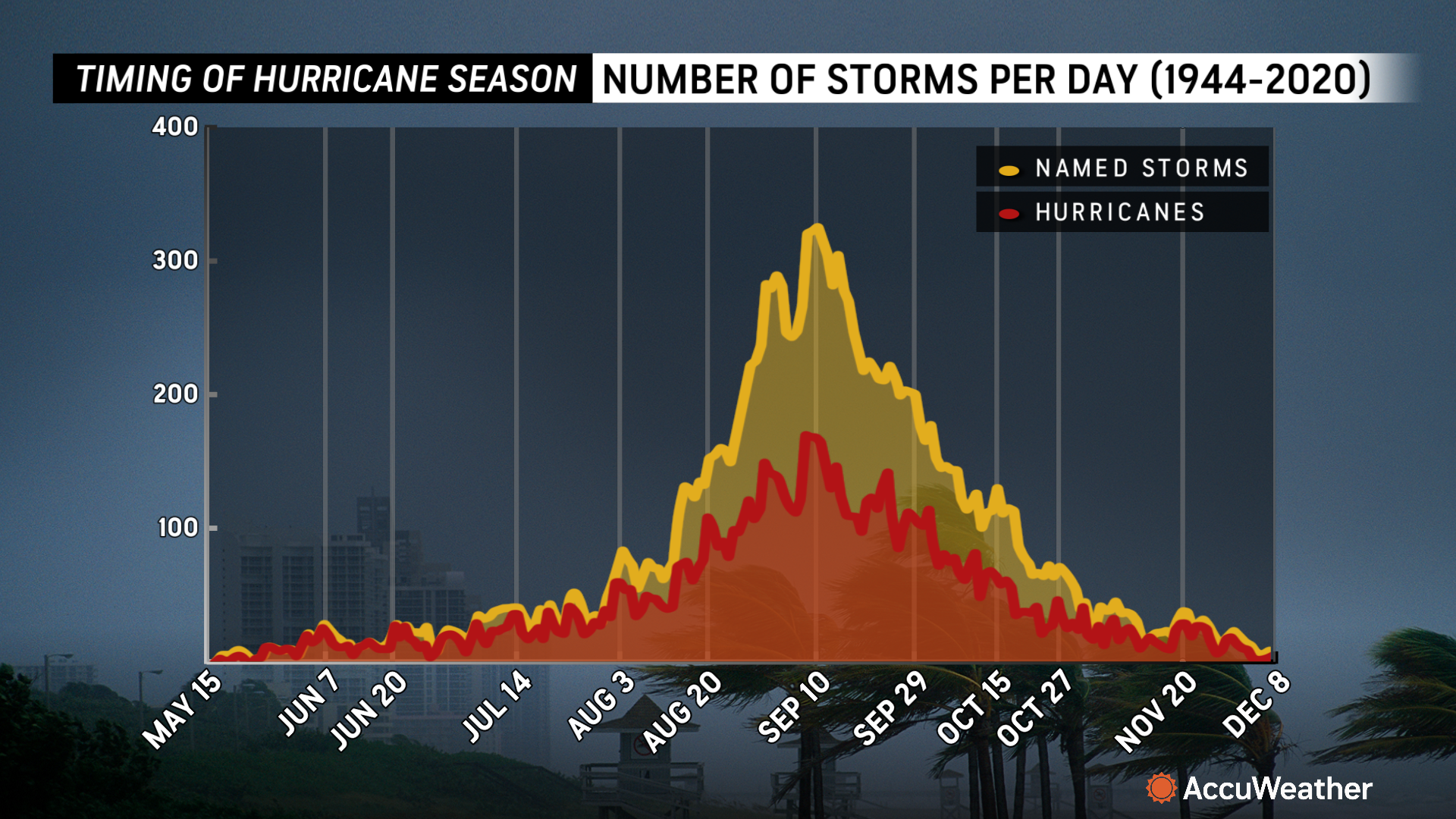
Porter added “should the current lull continue deeper into September, reductions in the forecast number of named storms will be needed because a longer time period in the core of the hurricane season will have been devoid of named storms."
Porter says a surge of Saharan dust, dry air, pockets of strong wind shear and sinking air which can prevent tropical waves from developing, limited tropical development during most of August, especially in the wake of Hurricane Debby.
Despite the recent lull in the tropics, AccuWeather expert meteorologists are urging people to prepare for an uptick in tropical threats in the month of September and beyond.
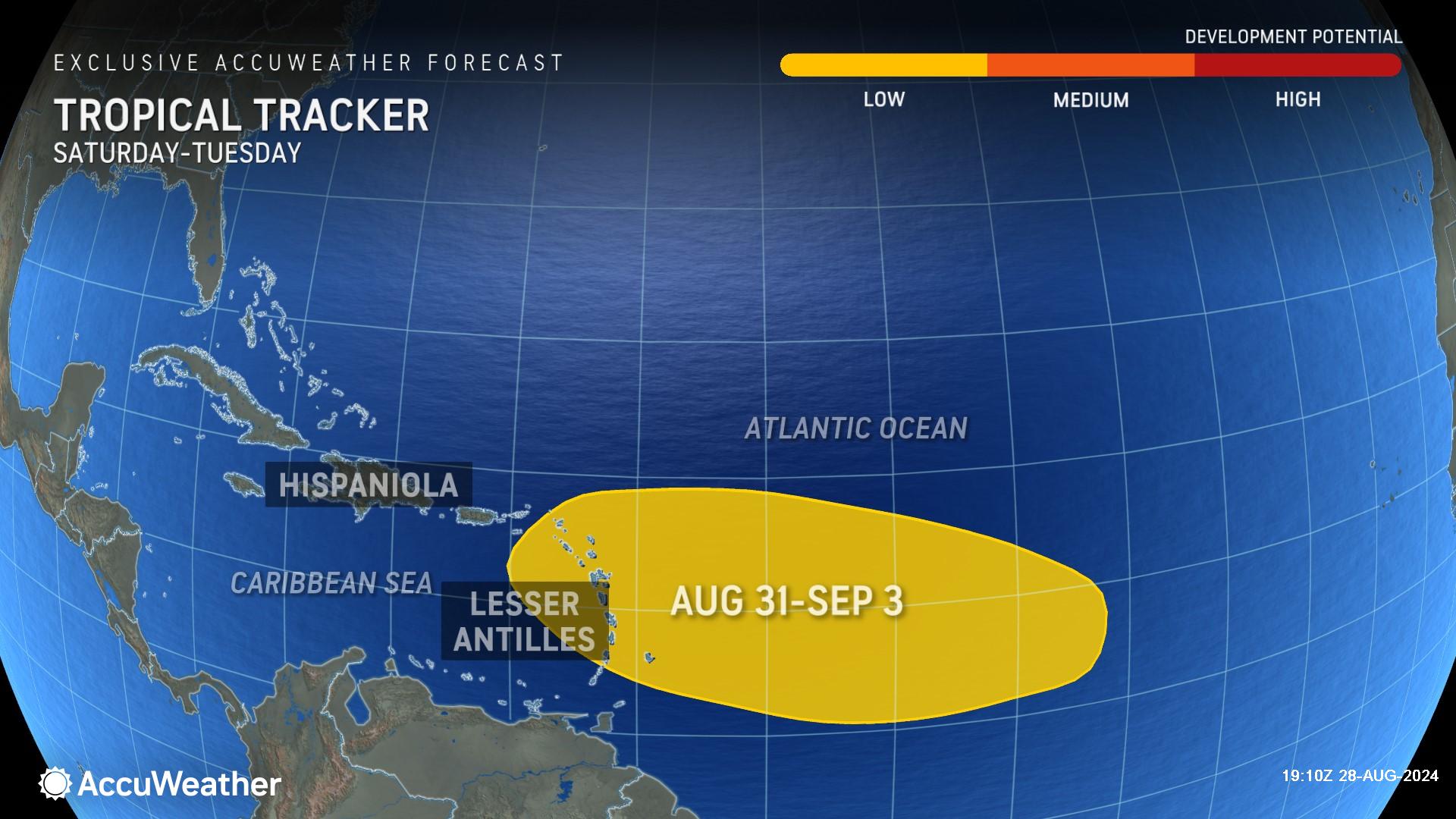
AccuWeather expert meteorologists are currently monitoring an area at low risk of tropical development east of the Lesser Antilles over the holiday weekend.
“While a total of 20-23 named storms is most likely, we cannot yet rule out 24 or 25 storms due to the many factors we have highlighted in previous forecasts including reduced wind shear as the season progresses, very warm water, an intensifying La Niña through the fall and the forecast of less dry, dusty air present in the atmosphere over the tropical Atlantic Ocean,” explained Porter.
The record number of named storms in the Atlantic basin from Sept. 1 through the end of the season is 16. AccuWeather expert meteorologists say there have been seasons in the past where eight named storms formed in the month of October. In the past, three named storms formed in November.
AccuWeather was the first known source to issue an Atlantic Hurricane Season Forecast in March. AccuWeather expert meteorologists are still forecasting 4-7 major hurricanes and 4-6 direct impacts on the United States.
Porter is urging families, businesses, emergency officials and government leaders to prepare for tropical threats that could last well into November.
“Now is not the time to let your guard down anywhere along the Gulf Coast, Atlantic Seaboard, or inland areas that can face impacts from hurricanes, tropical storms and tropical rainstorms. It only takes one powerful hurricane or slow-moving tropical rainstorm to create a major natural disaster. We typically see tropical activity taper off in late October and early November, but with such warm waters and conducive conditions expected, we could see tropical threats in late November, possibly even in December,” said Porter. “The presence of such warm water, especially the record warm waters of the Gulf of Mexico, remain extremely concerning because a significant risk remains for a storm that can take advantage of that high octane fuel. If certain atmospheric parameters are in place a storm could rapidly intensify, perhaps close to the coast, and greatly amplify the danger, damage and impacts.”
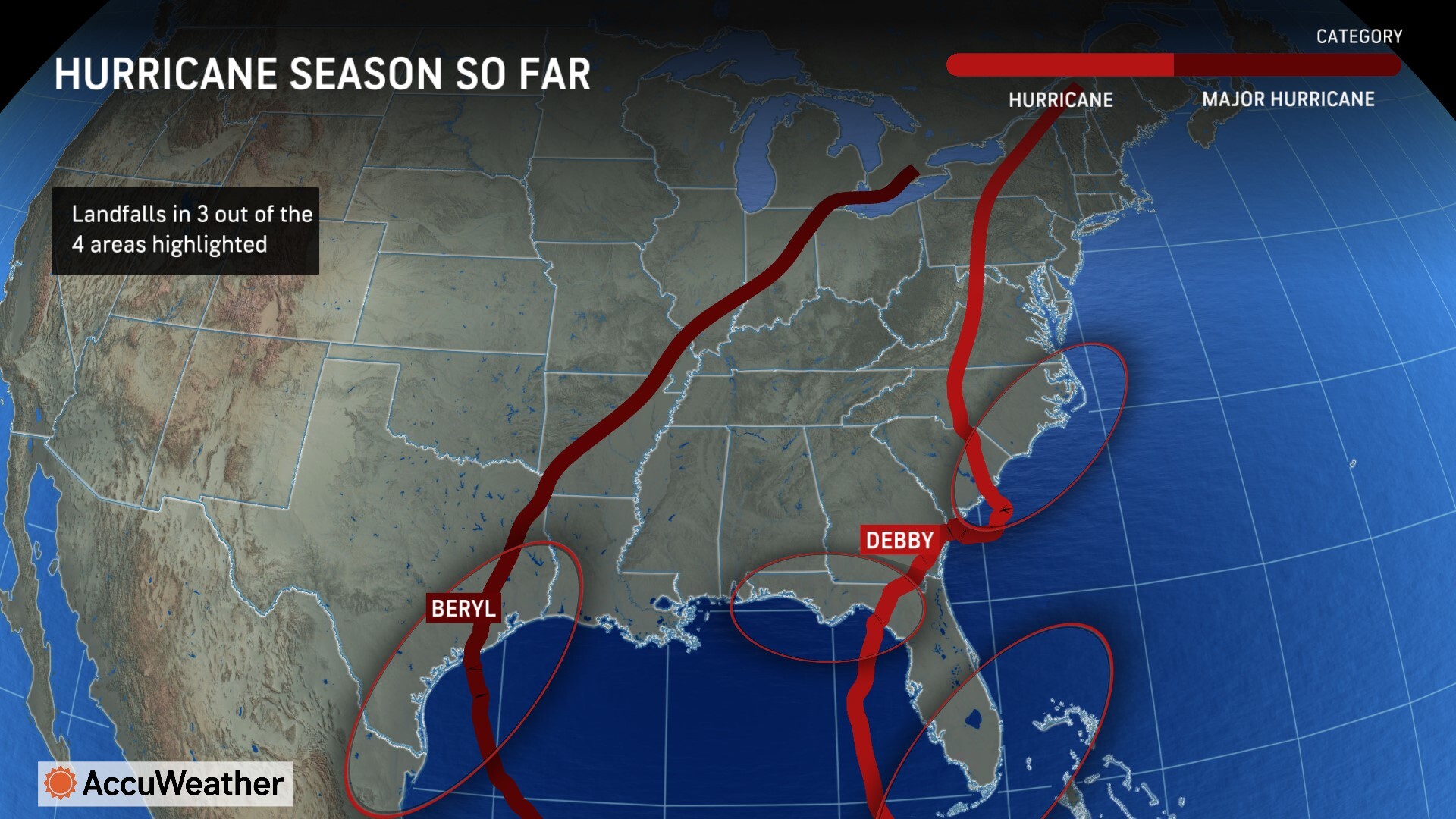
Two hurricanes have already caused billions of dollars in damage and economic loss, and tragically claimed several lives so far this hurricane season.
AccuWeather’s preliminary estimate of the total damage and economic loss from Hurricane Debby in the United States is $28 billion. Debby blasted Florida with powerful winds earlier this month and caused widespread, destructive flooding from the Carolinas to Pennsylvania.
AccuWeather’s preliminary estimate of the total damage and economic loss from Hurricane Beryl in the United States is $28-32 billion. Beryl slammed the Gulf coast and knocked out power to millions of Texans, leaving people without electricity and air conditioning for days. Beryl spun up dozens of tornadoes as it moved inland and resulted in serious flash flooding into Northern New England. Tornado damage was reported in Upstate New York, roughly 1,400 miles away from where the storm made landfall in Texas.
AccuWeather Forecast Graphics
Additional AccuWeather Resources:
Hurricane Tracking & Storm Radar
Hurricane season update: What the US can expect into September, October
AccuWeather Forecasts Explosive 2024 Hurricane Season
Rapidly Intensifying Hurricanes Near Coastline Pose Major Threat To U.S. This Season
'Supercharged' September expected in the tropics


