



AccuWeather meteorologists are available 24/7 to provide further insights and updates on evolving weather conditions. Please contact pr@accuweather.com during regular business hours, or support@accuweather.com or call AccuWeather’s Media Hotline at (814)-235-8710 at any time to arrange interviews with AccuWeather experts or to request the most updated graphics for print or broadcast.
Intense Pollen Will Lead To Longer Allergy Season Across Most Of America
|
|||||||||||||||||||
March 20, 2024
AccuWeather Global Weather Center – March 20, 2024
Pollen levels are on the rise across most of the United States, leaving many seasonal allergy sufferers sneezing and sniffling.
AccuWeather expert meteorologists say weather patterns and trends will contribute to a longer and more intense allergy season in 2024.
“This year will start off much earlier than most years in the East,” said
AccuWeather Senior Meteorologist Alan Reppert. “We could look at things to
be a full month ahead of normal with tree pollen, and still ahead when grass
pollen starts.”
Allergy experts track three key factors throughout the year; tree pollen, grass
pollen and weed pollen. Seasonal allergy sufferers may have different
reactions to different types of pollen, so knowing when pollen counts peak
can be useful for managing symptoms.
Reppert warns that it could be a bad year overall for seasonal allergies in the
eastern United States starting in mid-spring through the end of summer.
Tree Pollen
Trees are budding as much as three weeks ahead of the historical average
this year from New Jersey to Colorado.
“Warmer than historical average conditions in the mid-Atlantic and Northeast
will make for a much quicker and more forceful start to the pollen season,”
said Reppert.
Metro areas, including New York City, Philadelphia, Washington D.C., Kansas
City, and Denver, will see pollen arrive earlier and climb to higher levels
compared to recent seasons.
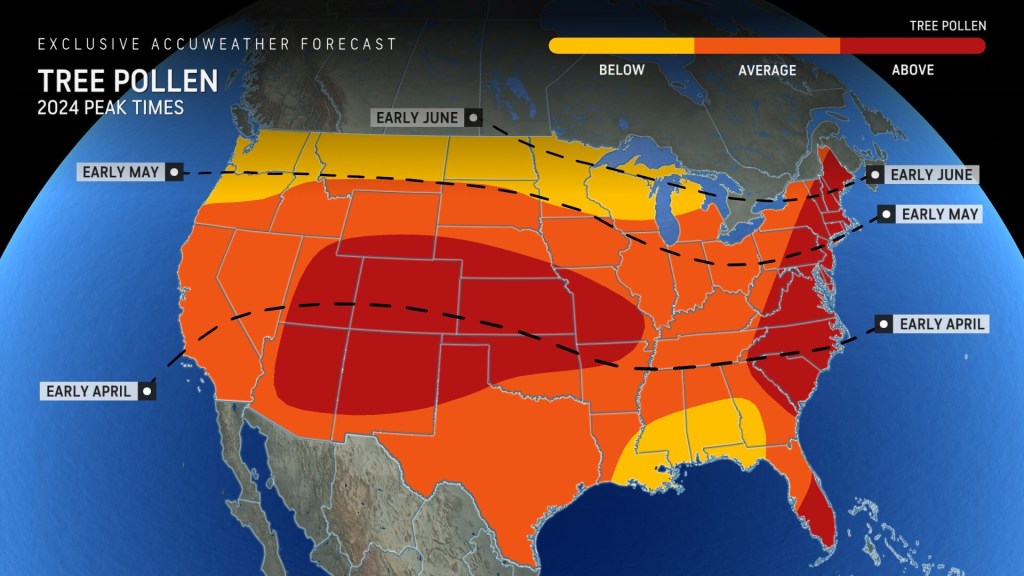
Tree pollen may not be as intense across the Southeast, but Reppert warns
that the season could last longer than recent years.
Grass Pollen
The primary allergy concern will shift to grass pollen as spring transitions to
summer.
An “intense and prolonged” grass pollen season is forecast for the interior
Northeast and Midwest. Some areas of the Pacific Northwest could also
experience elevated grass pollen levels throughout the summer.
Peak tree pollen levels in the Pacific Northwest and parts of the Northeast are
expected to occur around Independence Day, when millions of people spend
time outdoors at parades, barbeques and firework displays.
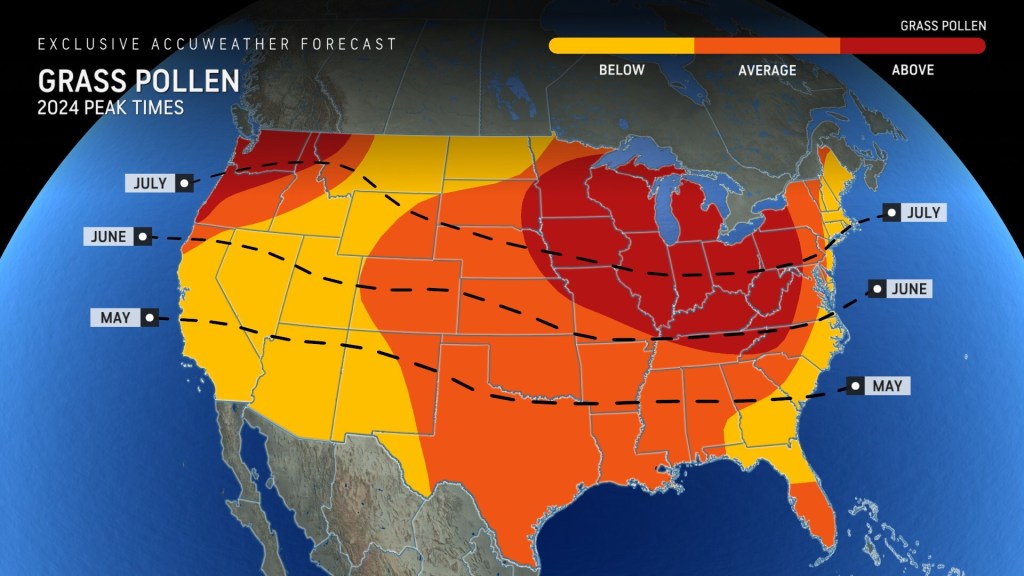
Reppert says a slight downturn in rainfall in July and August along parts of the
Mid-Atlantic could provide a break for allergy sufferers.
Grass pollen levels are expected to be near or below historical averages for
most of the Plains, Rocky Mountains and the Southwest.
Weed Pollen
The most widespread pollen-related issues are likely to occur in more than
two dozen states during the second half of summer.
A hyperactive weed pollen season is predicted to occur due to widespread
warmth.
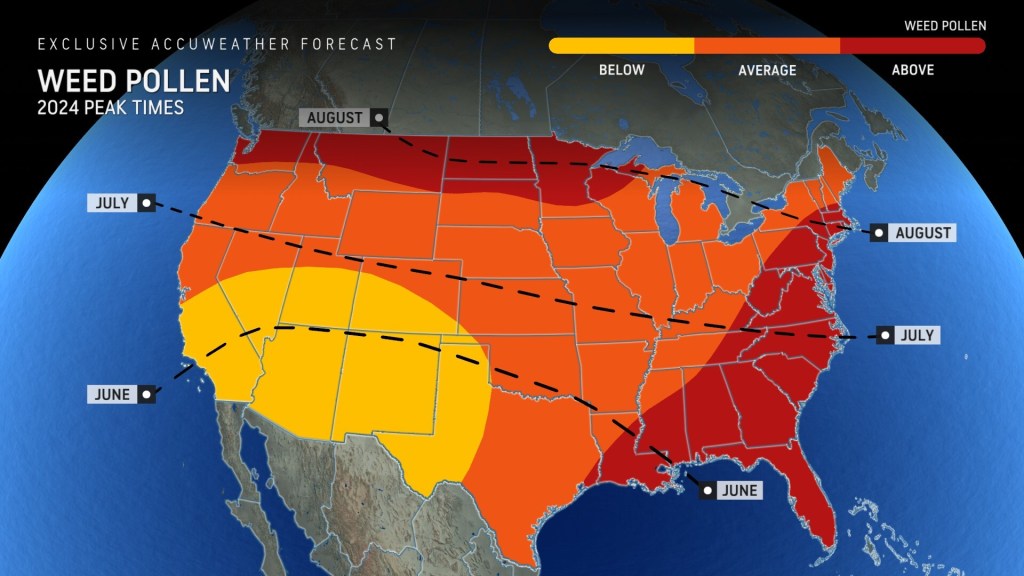
“Moisture will make a rapid surge in weed pollen over the Pacific Northwest
and into the northern Rockies and northern Plains,” said Reppert.
Advice For Allergy Sufferers
With more than 80 million people in America living with seasonal allergies,
Reppert says it’s important to monitor weather forecasts and talk with your
doctor to help manage symptoms.
- Start taking allergy medication before issues begin
- - Avoid outdoor activities during the late morning and afternoon hours
- - Keep car and home windows closed
- - Use air conditioning during high pollen days
- - Take off shoes and wipe down pets before going inside
- - Monitor pollen levels on the AccuWeather app
Additional AccuWeather Resources:


